
Headcrab Shell
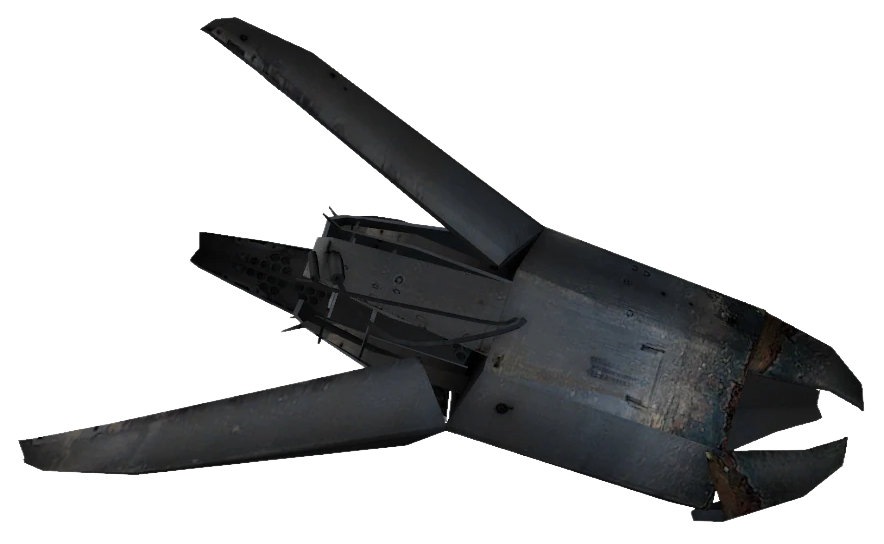
Where the Combine’s technology intersects with the untamable wilds of Earth’s fauna, there emerges something neither wholly machine nor purely organic: the Headcrab Shell. These hulking constructs are not products of Combine design doctrine, nor are they born of Earth’s original ecosystems. They are the result of adaptation- a fusion of alien influence and terrestrial menace that the Combine loves to do.
During the early years of occupation, the Combine encountered pervasive infestations of headcrabs in derelict corridors, collapsed infrastructure tunnels, and quarantine breaches. Simple resistance engagement proved costly as swarms overwhelmed enforcement lines and disrupted stability initiatives. When conventional suppression failed, the Combine responded not by eradicating the threat outright, but by weaponizing it.
The Headcrab Shell is the outcome.
Design and Origin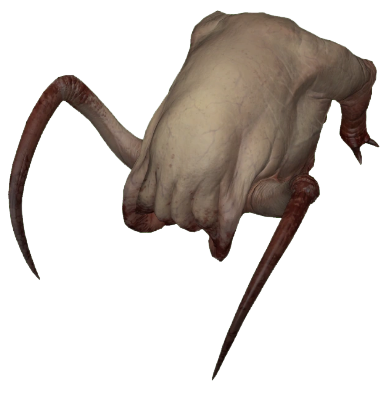
The Shell appears as a massive, armored exoskeleton woven around a hive of headcrabs. Its form is grotesque yet functional: thick, composite plating fused with sinew, organic chitin, and volatile neural clusters. A shell’s bulk resembles a squat behemoth. Within its armored carapace, headcrabs scuttle, coordinate, and provoke; driven not by instinct alone, but by bio‑engineered triggers derived from Combine experimentation.
Where traditional headcrabs are pests, the shell‑borne variants are siege beasts, bred to break lines and fracture defense protocols.
Behaviors
The Headcrab Shell does not hunt with finesse- it overwhelms. Its thick plates shrug off small arms fire as if caressed by mere wind. From beneath its shell, coordinated swarms of headcrabs erupt in sudden bursts, tearing at flesh and armor alike. Unlike ordinary infestation clusters, these constructs exhibit patterned aggression, responding to sound, movement, and threat signatures with lethal coordination.
Function and Deployment
The Combine treats Headcrab Shells as containment countermeasures rather than assets. They emerge where infestation stabilization fails or where resistance movements have exploited headcrab populations to create chaotic battlefields. In Outlands corridors and quarantine rim zones, they appear without warning, crushing patrol points and diverting enforcement resources.
In rare instances, shellings are deployed in slums within City and District limits- usually as a punishment for rising anti-civil movements.
When a Shell is sighted, standard protocol is withdrawal and recalibration. Civil Protection and OPA personnel are instructed not to engage without heavy suppression support. Infantry are advised to focus on mobility and coordinated fire to avoid encirclement.
Psychological and Operational Impact
Headcrab Shells serve both tactical and symbolic roles. They remind all who encounter them that occupation does not guarantee safety from the wild forces that predate it. They blur the line between engineered order and primordial chaos.
For occupied populations, rumors of Shell sightings spread faster than the creatures themselves, fostering dread, uncertainty, and compliance. For resistance groups, the Shell is a hazard and a testament to the Combine’s capacity to harness Earth’s nightmares as tools of suppression.
In the war for Earth’s surface, these constructs are neither ally nor traditional enemy. They are the wild cards: unpredictable, brutal, and terrifyingly efficient at turning any battlefield into a crucible of survival.